Crime & Law
The Median Time in Restrictive Housing in Illinois Prisons is 1 Week. But Some Assigned More Than 600 Days
The Illinois Department of Corrections has provided a glimpse into its use of restrictive housing in response to a new state law.
In May, there were 2,483 placements into restrictive housing, or what’s commonly known as solitary confinement or segregation. The longest time spent in restrictive housing were two men who had each spent over 600 days in assignment, despite IDOC directives capping extended restrictive housing to a year. The median time in restrictive housing in May was seven days.
Many who’ve been through restrictive housing attest to extreme isolation and confinement in small, dark, windowless cells. Phone and tablet use can be restricted. Yard or outside time is limited.
“They’re just there with nothing to do, nothing to occupy them, except for their own minds,” said Nicole Schult, legal director of Uptown People’s Law Center. The law center is currently litigating over IDOC’s use of restrictive housing.
The release of this data is the result of a law passed earlier this year known as the Nelson Mandela Data Collection Act. It requires the Illinois Department of Corrections to post quarterly reports on its use of restrictive housing.
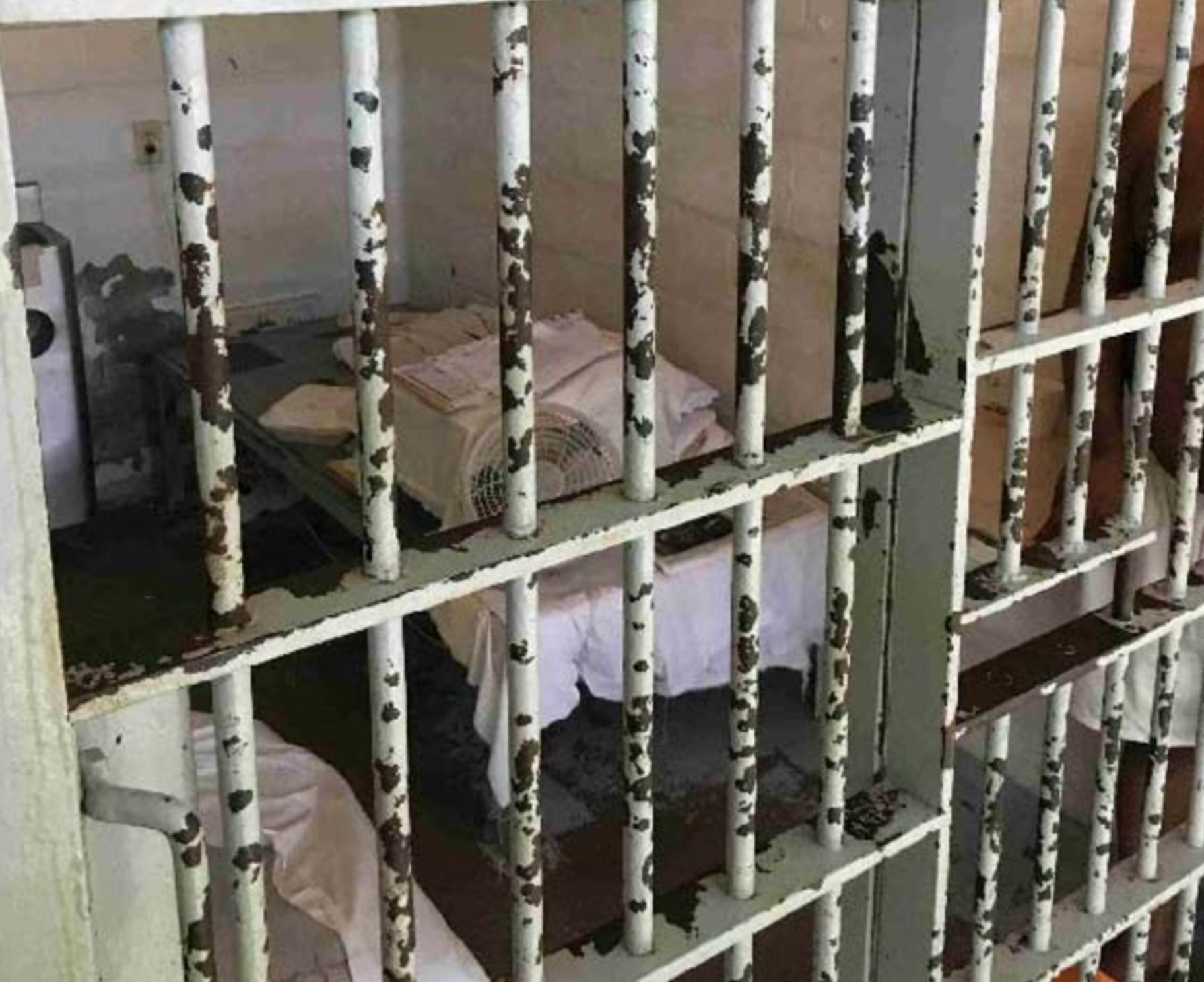 A restrictive housing cell at Pontiac Correctional Center from a 2019 expert report in Davis v. Jeffreys, a lawsuit over restrictive housing conditions filed by Uptown People’s Law Center. “In one cell a prisoner showed me a hole in the wall that he said was used by rats. Multiple prisoners complained about rodent and insect infestation.”
Proponents of the law say it’s intended to bring transparency into the practice in hopes of enacting restrictions on its use. But some say there’s still work to do to get the full scope of confinement in Illinois prisons.
“It’s not capturing everything that is actually going on behind those prison walls,” Schult said.
According to IDOC directives, restrictive housing is used for disciplinary reasons and for the “safe and secure operation of a facility.” But there are other ways those incarcerated are held in confinement that’s not captured in this data, Schult said. Those going through a mental health crisis could be placed in crisis cells. There’s also “C Grade” housing, which can restrict a person’s access to telephones and other resources, she said.
In the spring, Uptown People’s Law Center and Equip for Equality filed a lawsuit alleging those in need of mental health care are met with punishment, including segregation.
IDOC did not include all of the data required by the recently passed law in their latest release, like access to health care and the amount of time it takes for a person in restrictive housing to see a physician after requesting one.
The department noted in this release that IDOC’s computer programming does not allow the capture of all data in the manner the law intends. More data will be available once computer programming has been completed, the department noted. IDOC did not respond to multiple requests for comment from WTTW News, including questions on clarifying why this data was not included.
What the department does include are snapshots of just two months, April and May, including how often facilities have people on lockdown, the reason for their confinement, days in assignment and demographic data.
In April, there were 2,420 restrictive housing placements, totaling 23,200 days. In May, there were 2,483 restrictive housing placements, totaling 20,422 days. Under some placements, there are no amount of days included.
Black people were disproportionately held in restrictive housing, making up 65% of instances in May, while making up 55% of the total prison population in March, the most recent data available from the department.
In May, 491 placements in restrictive housing were people designated seriously mentally ill — “it’s really disheartening to see the number of people with mental illness in segregation, in these numbers,” Schult said.
There are no laws in Illinois curtailing the use of restrictive housing. IDOC does have internal directives on the practice. Restrictive housing is not to exceed 28 days and extended restrictive housing, if officials deem a person to be an immediate and present danger, is not to exceed a year. But Schult said those IDOC administrative directives are not binding, meaning the incarcerated people don’t have any recourse to force the department to follow those rules.
Research has shown prolonged solitary confinement can cause significant psychological or physical harm. The United Nations Standard Minimum Rules for the Treatment of Prisoners, i.e. the Nelson Mandela Rules, says it’s to be used only in extreme cases and that indefinite or prolonged confinement should be prohibited.
 A restrictive housing cell at Menard Correctional Center, from a 2019 expert report in Davis v. Jeffreys, a lawsuit over restrictive housing conditions filed by Uptown People’s Law Center. “I asked one prisoner to place his hand on the cell wall and then reach across to place his hand on the other wall. He did so and could touch both sides of his cell with a hand on one cell wall and his bent elbow touching the other,” the report details.
A 2016 lawsuit brought by Uptown People’s Law Center against IDOC alleged that some individuals were held in confinement between six months and 17 years. The conditions described include being confined 24 hours a day to small, airless cells with no natural light, reduced food and minimal yard time. The case is scheduled to go to trial in October.
Brian Beals, one of the longest serving exonerees in Illinois history, said he remembers how crushing it was to get segregation for 60 days over an extra stick of deodorant in his cell — he was allotted two sticks and had three.
“When you get extensive seg time, you just try to sink into yourself, … just trying to be numb to everything that’s going on,” Beals said.
Beals, now the future leaders apprentice with the criminal justice policy group Restore Justice, said the practice is overused — and he hopes this release of data can show that, leading to legislative action limiting its usage.
Originally, the bill included restrictions on how often someone could stay in restrictive housing. State Rep. Kevin Olickal (D-Chicago), who sponsored the bill, said after conversations with stakeholders like IDOC and advocates, there needed to be a better understanding of how restrictive housing is used.
“We don’t want to take that tool away from them completely, we just want to be able to regulate it and hopefully that encourages the use of different approaches, most sustainable approaches,” Olickal said.
In 2023, a law went into effect making it illegal to confine incarcerated youth in solitary confinement in Illinois for any purpose other than preventing immediate physical harm.
Jared Rutecki contributed to this report.
Contact Blair Paddock: @blairpaddock | [email protected]